

The Box of Letters Nobody Can Read Is Now Readable in an Afternoon
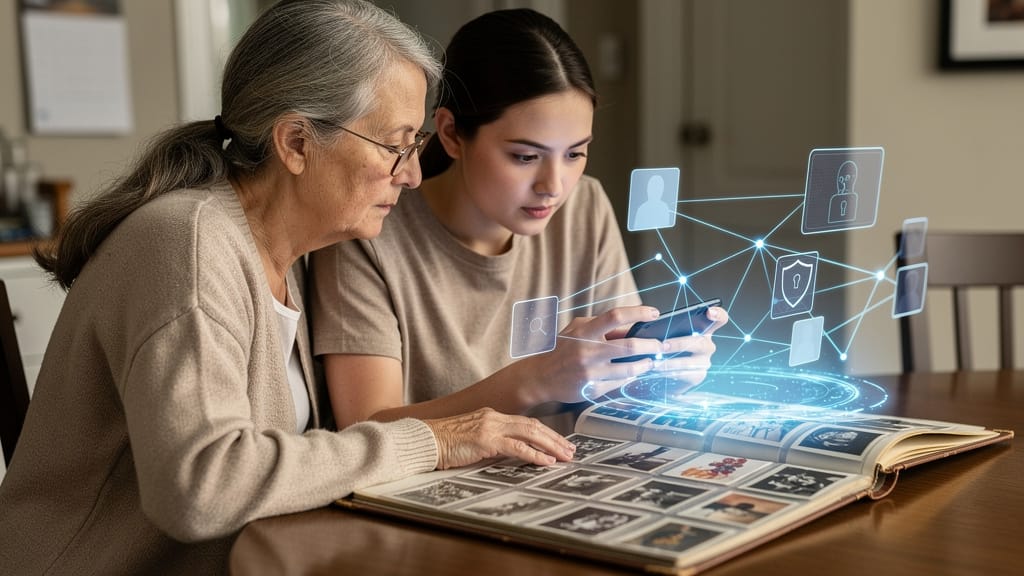
Most families have one: a box of photographs with no names on the back, a bundle of letters in handwriting that has become unreadable to modern eyes, a certificate in a language nobody in the family speaks any more. It

Most families have one: a box of photographs with no names on the back, a bundle of letters in handwriting that has become unreadable to modern eyes, a certificate in a language nobody in the family speaks any more. It sits in a closet because opening it means a project, and the project never has a good week to start.
The work in that box, the deciphering, the transcribing, the cross-referencing, is precisely the kind of patient reading a machine does well now. What used to be a winter of evenings is now an afternoon, which changes whether it happens at all.
Look Behind the Curtain
Three capabilities do most of the work, and none of them are speculative.
The first is handwriting recognition applied to old documents. FamilySearch's full-text search uses this to create transcripts of handwritten historical records, which lets you search collections that were never indexed and find a name in seconds where the same task would have meant scrolling images for hours. Its indexing now runs an AI read of a record to pull out names and dates, with human volunteers verifying, which is why so much more material has become searchable in the last two years.
The second is that general assistants can read an image of a document and transcribe it. Photograph a letter in old cursive, or a certificate in German or Ukrainian, and you get a transcription and a translation. Nineteenth-century handwriting uses letter forms and abbreviations that genuinely are hard for an untrained modern reader, which is exactly the gap being closed.
The third is photo restoration. Faded, torn, water-marked and out-of-focus prints can be repaired and sharpened well enough to recognize a face, and often well enough to print.
The limitation is the one every genealogist repeats, and it matters more here than in most uses. These tools produce plausible readings, and a plausible reading of a smudged surname is sometimes wrong. FamilySearch's own guidance is to verify AI output against the original source. A transcription is a lead, not a fact, until you have looked at the image yourself.
Restoration has a related caution. An AI repair invents detail to fill damage. That is fine for a display copy and wrong for an archive, so keep the untouched scan.
The Capability Multiplier
The real gain is that the barrier was never interest. Families want this done. The barrier was that the first three hours produced almost nothing, and most people stopped there. Removing the tedious middle means the project reaches the part that is actually rewarding, which is the stories.
There is a time element that does not wait. The people who can identify the faces in those photographs are the oldest members of the family, and that window closes. Getting the box scanned and roughly transcribed this month means you can sit down with a parent or an aunt while they can still tell you who is standing on the left, which is the piece no technology recovers later.
It also makes the material usable. A shoebox is not an archive. Scanned images with transcribed text, names, dates and places attached become searchable, shareable with relatives, and survivable, which a shoebox in a closet is not.
For anyone who has hesitated because genealogy software felt like a hobby requiring commitment, note that the entry point is now a phone camera and a conversation. You can start with one letter.
The Sovereign Action
Start with a single stack rather than the whole box. Momentum matters more than completeness.
- Scan or photograph originals at high resolution first, and keep those files untouched. Every later step works from copies.
- Use full-text search on genealogy archives to find names in records that were never indexed, then open the original image to confirm.
- Photograph handwritten letters and ask an assistant to transcribe and translate them, then check names, dates and places against the image yourself.
- Restore a copy of a damaged photograph for display, and keep the unedited scan as the record.
- Sit down with the oldest relative who will talk to you, show them the photographs, and record the conversation. That is the part with a deadline.
More to Explore

The Top Search Result for "Renew My Passport" Was Not the Government
Search for how to apply for a new passport and the first thing on the page is usually
Microsoft Publisher Disappears This Month. Its Own Notice Says Nothing About Your Files.
Thirty-five years after it shipped, Microsoft Publisher reaches end of life this month. Microsoft's own
A Database of Court Rulings on Fake AI Citations Just Passed 2,200. Most Involve People With No Lawyer.
A legal researcher maintains a public database of court decisions in which a judge found that generative AI
The Real Number in the FTC's Elder Fraud Report Is Not the One in the Headlines
The Federal Trade Commission sent its annual report on older consumers to Congress this week, and one figure

Android's Newest Scam Defenses Are Real. Most of Them Are Switched Off.
Google announced a set of scam protections for Android this month, and two of them are the kind
The 1099 Threshold Just Tripled. Three Things It Did Not Change.
For as long as most small business owners have been in business, the number was six hundred dollars.